Fades Sun Spots & Freckles
Selectively targets melanin in solar lentigines and ephelides — lesions darken then exfoliate over 7–14 days, revealing clearer skin beneath.
Laser, Light & Energy · Intense Pulsed Light


Lumecca is a high-peak-power intense pulsed light (IPL) device by InMode that delivers broad-spectrum light (approximately 500–1200nm) in calibrated pulses to selectively target chromophores in skin — melanin in pigmented lesions and hemoglobin in vascular structures. Photothermal energy is absorbed by these targets, causing their fragmentation or coagulation while sparing surrounding tissue. At Aurevia Skincare in Irvine, Lumecca is our platform for sun spots, freckles, diffuse sun damage, telangiectasia, rosacea-related erythema, and overall photorejuvenation with minimal downtime.
Intense pulsed light (IPL) is a non-laser light technology that emits a broad wavelength band filtered to target specific chromophores. Lumecca by InMode uses a xenon flashlamp to deliver high-peak-power pulses with a large spot size and advanced contact cooling — allowing efficient treatment of pigment and vasculature across the face and body.
When melanin-rich structures (solar lentigines, freckles, diffuse dyschromia) or hemoglobin-rich vessels (telangiectasia, cherry angiomas, rosacea-associated erythema) absorb IPL energy, they heat selectively. Pigmented lesions darken initially then flake away over 1–2 weeks; vascular lesions blanch or thrombose and fade over subsequent weeks. Collagen stimulation from dermal heating also contributes to improved skin tone and fine-line softening — the photorejuvenation effect.
Unlike single-wavelength lasers, IPL's polychromatic output addresses multiple targets in one session. Lumecca's high peak power allows fewer pulses per lesion compared with lower-energy IPL platforms, often translating to shorter treatment times and more visible correction per visit.
*IPL is generally not recommended for Fitzpatrick types V–VI due to melanin competing for light absorption and increased PIH risk. Candidacy is confirmed at consultation.
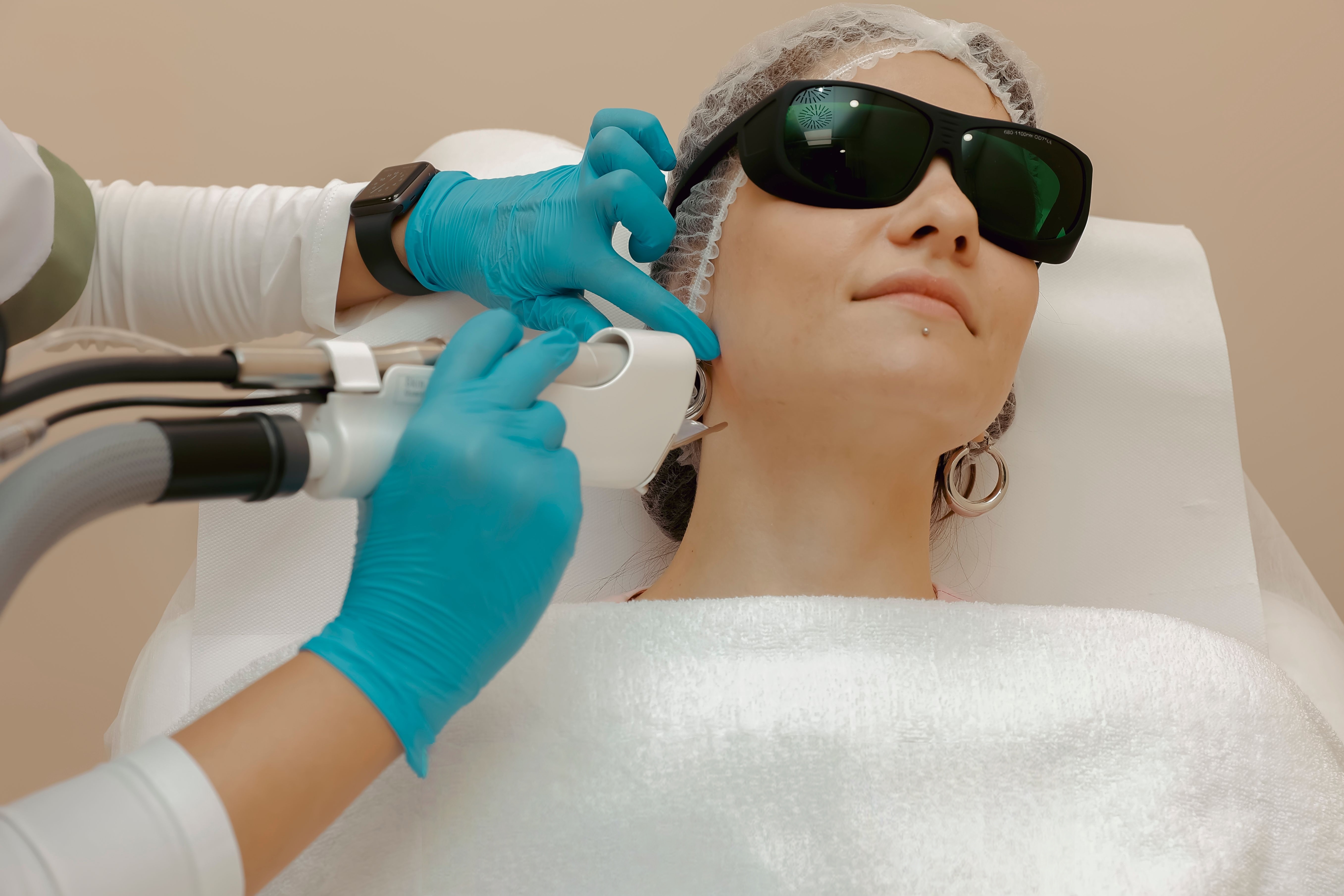
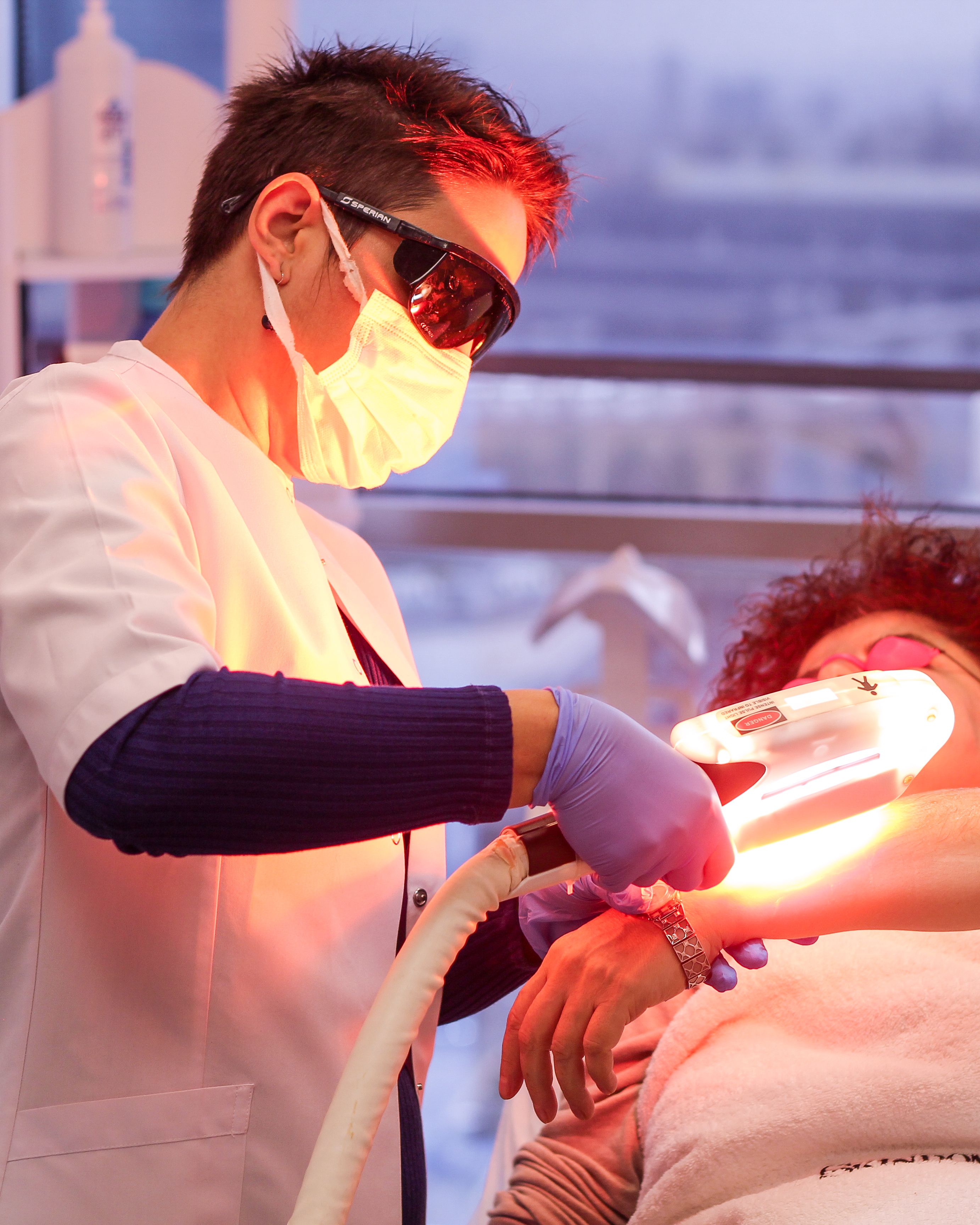
At Aurevia, Lumecca IPL is performed as an in-office procedure with minimal preparation. After cleansing and application of clear ultrasound gel, the handpiece delivers calibrated light pulses across the treatment zone. Built-in sapphire contact cooling protects the epidermis and improves patient comfort.
Patients typically describe each pulse as a brief snap — like a rubber band against skin — followed by mild warmth. Pigmented spots darken immediately (a positive treatment endpoint called "micro-crusting"); vascular lesions may blanch or appear slightly purple. A full-face session takes approximately 20–30 minutes; smaller zones require less time.
No topical numbing is usually required. Protective eyewear is worn by both patient and provider throughout the session. Post-treatment, skin may appear mildly flushed; darkening of pigment is expected and resolves as spots flake off over the following week.
High-peak-power IPL delivers efficient pigment and vascular correction with minimal downtime — ideal for patients seeking a brighter, more even complexion without ablative laser recovery.
Selectively targets melanin in solar lentigines and ephelides — lesions darken then exfoliate over 7–14 days, revealing clearer skin beneath.
Addresses telangiectasia, diffuse facial erythema, and rosacea-associated redness by coagulating hemoglobin-rich vessels with minimal surrounding damage.
Improves diffuse photoaging, mottled pigmentation, and sallow complexion through broad photorejuvenation — stimulating collagen and reducing dyschromia.
Dermal heating from IPL promotes mild collagen remodeling — contributing to smoother texture and softened periorbital and perioral fine lines over a treatment series.
Most patients return to normal activities immediately. Mild erythema and darkening of treated spots resolve within 3–7 days — far less than fractional laser resurfacing.
Lumecca IPL is generally not recommended for very dark skin (Fitzpatrick V–VI), tanned skin, active melasma (without a comprehensive pigment management plan), pregnancy, or photosensitizing medications. A consultation confirms candidacy and sets realistic expectations for number of sessions required.
Lumecca's large spot size and high peak power make it efficient for treating sun-exposed zones where pigment and vascular damage accumulate. Your Aurevia provider maps a plan based on lesion distribution and skin type.
Comprehensive photorejuvenation addressing solar lentigines, diffuse dyschromia, telangiectasia, and rosacea-related erythema across the forehead, cheeks, nose, and chin. The most common Lumecca treatment zone for overall complexion renewal.
Targeted treatment of periorbital sun damage and nasal telangiectasia — with conservative parameters on thinner periorbital skin. Protective eyewear is essential throughout.
Sun-damaged chest skin with mottled pigmentation, poikiloderma, and vascular staining — an often-neglected zone that responds well to IPL when contrast between lesion and surrounding skin is adequate.
Age spots (solar lentigines) and visible veins on the dorsal hands — restoring a more youthful appearance to this frequently sun-exposed area. Multiple sessions may be needed for dense pigment.
Poikiloderma of Civatte and diffuse redness on the lateral neck — common in patients with cumulative UV exposure. Parameters are adjusted for thinner neck skin.
Individual cherry angiomas, isolated sun spots, or small vascular lesions can be treated with precise spot applications — useful for touch-ups between full-zone sessions.
Your provider evaluates lesion type, Fitzpatrick skin type, and recent sun exposure. Pre-treatment requires avoiding tanning and photosensitizing medications. A patch test may be recommended for borderline skin types.
Makeup and sunscreen are removed; skin is cleansed. Ultrasound gel is applied to couple light energy. Protective eyewear is placed for both patient and operator.
The Lumecca handpiece delivers high-peak-power pulses across the treatment zone. Pigmented lesions darken immediately; vascular targets blanch or purple briefly. Sapphire contact cooling protects the epidermis throughout.
Mild erythema resembling a sunburn is normal and resolves within hours to 1–2 days. Treated pigment darkens and may feel slightly rough — do not pick or scrub. Apply gentle moisturizer and SPF 30+ immediately.
Pigmented lesions flake off over 7–14 days. Vascular improvement unfolds over 2–4 weeks. Most patients benefit from 1–3 sessions spaced 4–6 weeks apart. Collagen-based tone improvement continues for weeks after each session.
20–30 minutes per session. After cleansing and gel application, the Lumecca handpiece delivers filtered IPL pulses across the treatment zone. No numbing is typically required. Face, décolleté, hands, and neck are commonly treated — your plan is customized at consultation.
Minimal downtime. Mild redness for hours to 1–2 days. Treated pigment darkens and flakes over 7–14 days — do not pick. Avoid sun, heat, and harsh actives during healing. Daily SPF 30+ is mandatory before and after all IPL sessions.
Progressive clearing over weeks. Pigment fades as micro-crusts exfoliate; vascular lesions improve over 2–4 weeks. Optimal outcomes typically require 1–3 sessions. Results last months to years with diligent sun protection; new sun damage can recur without SPF compliance.
Priced by treatment zone. Irvine Lumecca IPL sessions typically range from $300 – $800 per treatment depending on areas treated (face, décolleté, hands, or combination). Series pricing is quoted at consultation based on lesion severity and recommended session count.
IPL and fractional laser resurfacing both use light energy for skin rejuvenation — but they differ in wavelength specificity, tissue interaction, and the concerns they address best. This comparison helps you choose the right approach.
| Feature | Lumecca IPL | HALO Laser Resurfacing |
|---|---|---|
| Light type | Broad-spectrum IPL (500–1200nm, filtered) | Dual-wavelength laser (2940nm Er:YAG + 1470nm diode) |
| Primary mechanism | Selective photothermolysis of pigment & vasculature | Fractional ablation + dermal coagulation |
| Best for | Sun spots, freckles, redness, rosacea, diffuse tone | Wrinkles, texture, pores, scarring, deep photoaging |
| Epidermal effect | Minimal — pigment darkens and flakes | Fractional ablation with bronzing and peeling |
| Collagen remodeling | Mild to moderate | Strong — dual-depth neocollagenesis |
| Typical downtime | 0–2 days (mild redness, pigment darkening) | 3–7 days (bronzing, peeling, erythema) |
| Sessions needed | 1–3 for pigment/vascular concerns | 1–3 for texture/wrinkle correction |
| Skin type suitability | Fitzpatrick I–IV (contrast-dependent) | Fitzpatrick I–IV most common; V–VI with caution |
Many patients benefit from combining IPL for pigment and vascular correction with fractional laser for texture and wrinkle improvement — staged appropriately by your Aurevia provider.
IPL is deceptively simple — outcomes depend entirely on fluence, filter selection, pulse timing, and understanding which lesions will respond. At Aurevia Skincare, Lumecca treatments are calibrated to your Fitzpatrick type and lesion profile. We prioritize safe, predictable pigment clearing over aggressive settings that risk burns or post-inflammatory hyperpigmentation.Aurevia Skincare · Irvine, CA
IPL emits a broad band of wavelengths (polychromatic light) filtered to target pigment and hemoglobin. Lasers emit a single wavelength with greater precision for specific chromophores or tissue ablation. IPL is ideal for mixed pigment and vascular concerns; lasers like HALO are better for texture, wrinkles, and deeper remodeling. Lumecca's high peak power bridges the efficacy gap between standard IPL and laser platforms.
Most patients describe each pulse as a brief snap — similar to a rubber band on skin — followed by mild warmth. Sapphire contact cooling minimizes discomfort. Topical numbing is rarely needed. Sensation is generally well-tolerated without anesthesia.
Many patients see significant improvement after 1–2 sessions for sun spots and vascular lesions. Stubborn or dense pigment may require 3 sessions spaced 4–6 weeks apart. Your Aurevia provider assesses lesion depth and contrast at consultation to recommend an appropriate series.
Darkening of pigmented lesions immediately after treatment is a positive endpoint — it indicates melanin absorbed the light energy. Lesions form micro-crusts that flake off over 7–14 days, revealing clearer skin. Do not pick or scrub treated areas during this phase.
Yes — Lumecca targets hemoglobin in dilated vessels and diffuse erythema associated with rosacea. Multiple sessions may be needed for sustained improvement. IPL addresses vascular redness but does not cure rosacea; ongoing sun protection and trigger management remain important. It is often combined with medical-grade skincare and other modalities for comprehensive rosacea management.
IPL is generally recommended for Fitzpatrick types I–IV where contrast exists between lesion color and surrounding skin. On darker skin (types V–VI), melanin in the surrounding epidermis competes for light absorption, increasing burn and post-inflammatory hyperpigmentation risk. Your provider assesses candidacy carefully; alternative treatments may be recommended for darker skin tones.
Avoid sun exposure, tanning beds, and self-tanners for 2–4 weeks before treatment. Disclose photosensitizing medications (certain antibiotics, retinoids, St. John's wort). After treatment, avoid sun, heat, saunas, and harsh exfoliants until pigment has fully resolved. Apply broad-spectrum SPF 30+ daily — this is the single most important factor in maintaining IPL results.
Aurevia Skincare is Irvine's destination for advanced photorejuvenation. Discover whether Lumecca IPL is right for your pigment, vascular, and complexion goals with a consultation from our clinical team.